Summer 2026
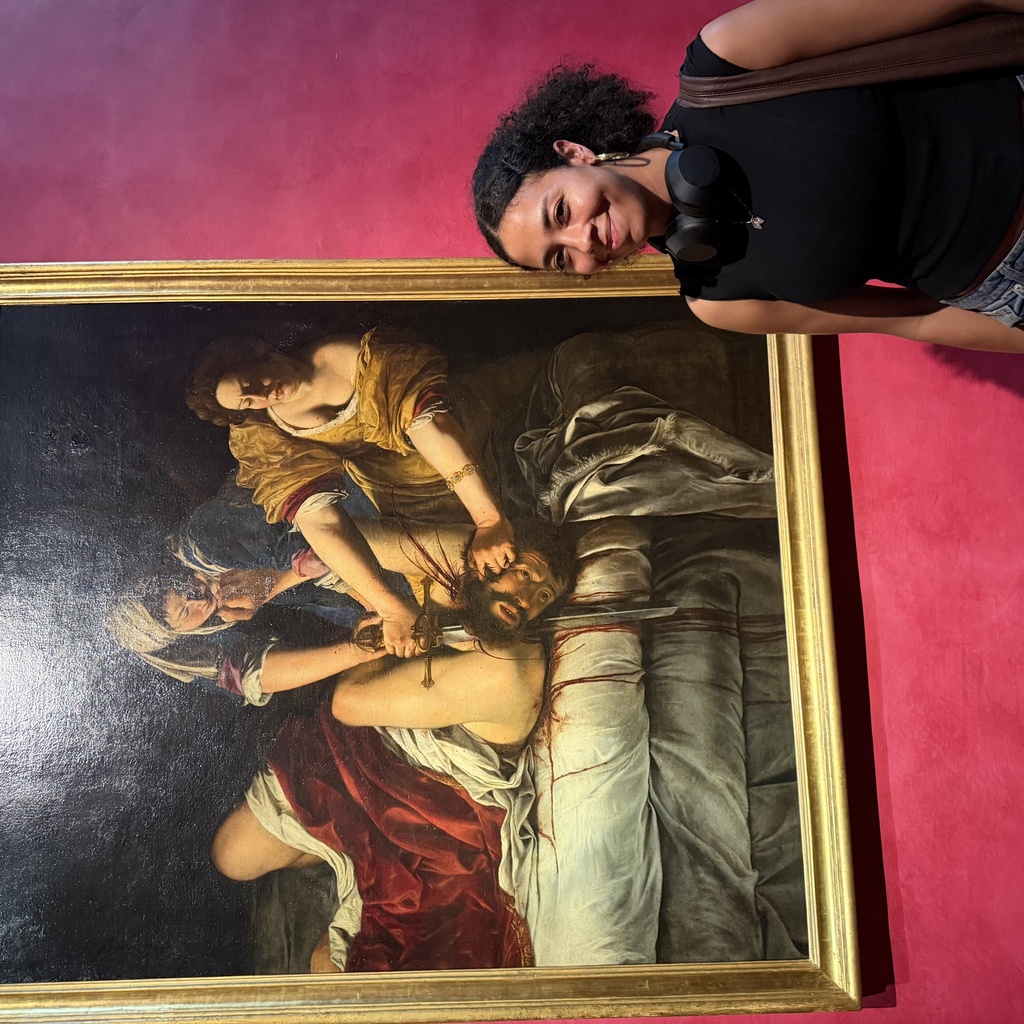
Tess Nalls
In the summer of 2026, I had the opportunity to do international research in Europe for my master's qualifying paper. With funding from the Margarette Ellyson Rice Award and additional GPSG funding, I traveled to London, Rome, Florence, and Zurich to study the works of Artemisia Gentileschi and Angelica Kauffman firsthand in museum collections.
In Rome and Florence, I was able to access archives and examine primary sources that will supplement my paper. In Florence, I also participated in the Medici Archive Project's week-long paleography seminar, which taught me skills for reading early modern Italian manuscripts.
Overall, the trip was very influential for my research, and I made valuable connections, including meeting one of the authors I cite most.
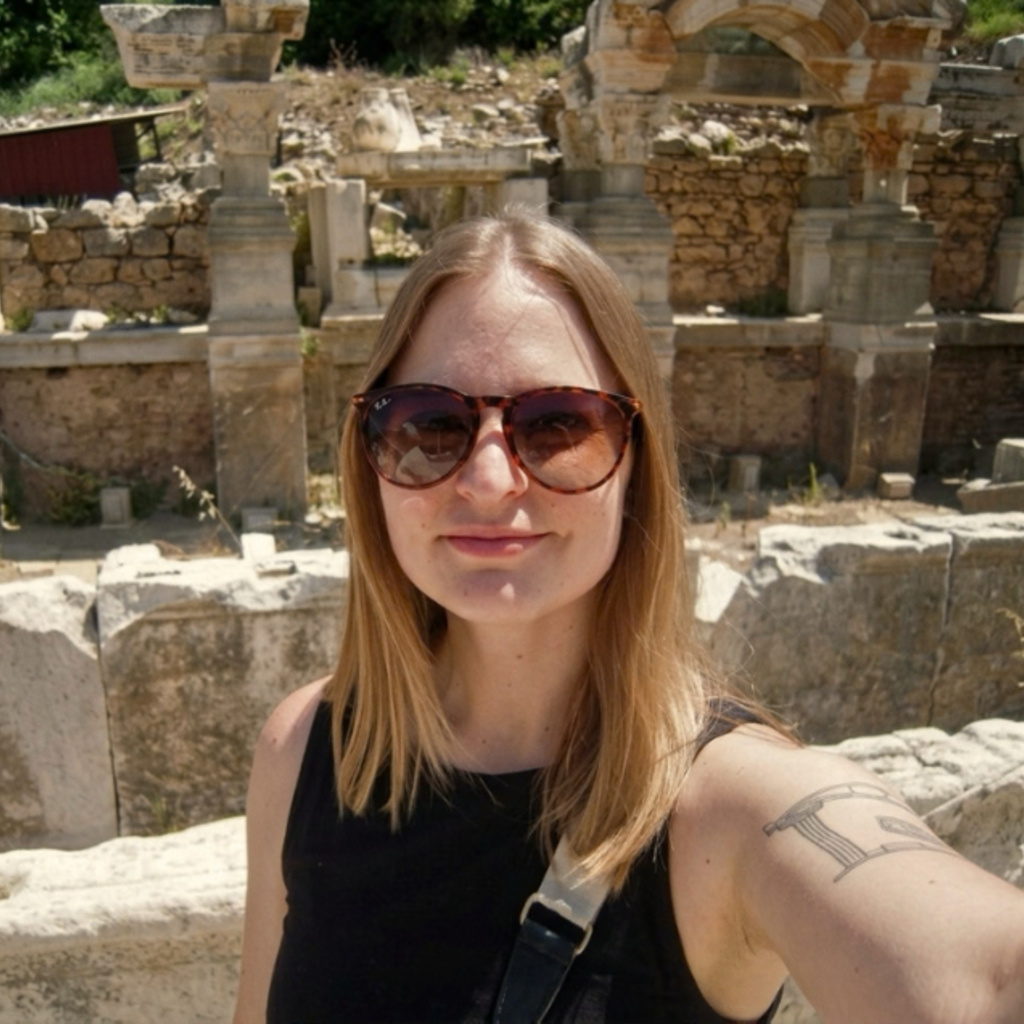
Alexa O’Day
This past summer, I advanced the research for my qualifying paper thanks to the Summer Scholar award from the School of Art, Art History, and Design.
The ubiquity of goats in Assyrian art prompted my central question: could these motifs have influenced the Wild Goat style of Ancient Greek pottery? I explored this by comparing Wild Goat pottery designs with similar motifs in Assyrian palatial reliefs and textile trade inventories. I analyzed museum collections across London, Oxford, Izmir, Istanbul, and Athens, where key findings at both the British Museum and the National Archaeological Museum in Athens reshaped the trajectory of my thesis.
Additionally, I visited ancient East Greek trading centers in modern-day western Turkey, including Smyrna, Ephesus, Myra, and Perge. Experiencing their sprawling agoras and city streets firsthand provided a deeper understanding of ancient commerce. While months of research prepared me for “aha!” moments to occur while on location, nothing compared to conducting fieldwork directly within the ancient sites and museums.
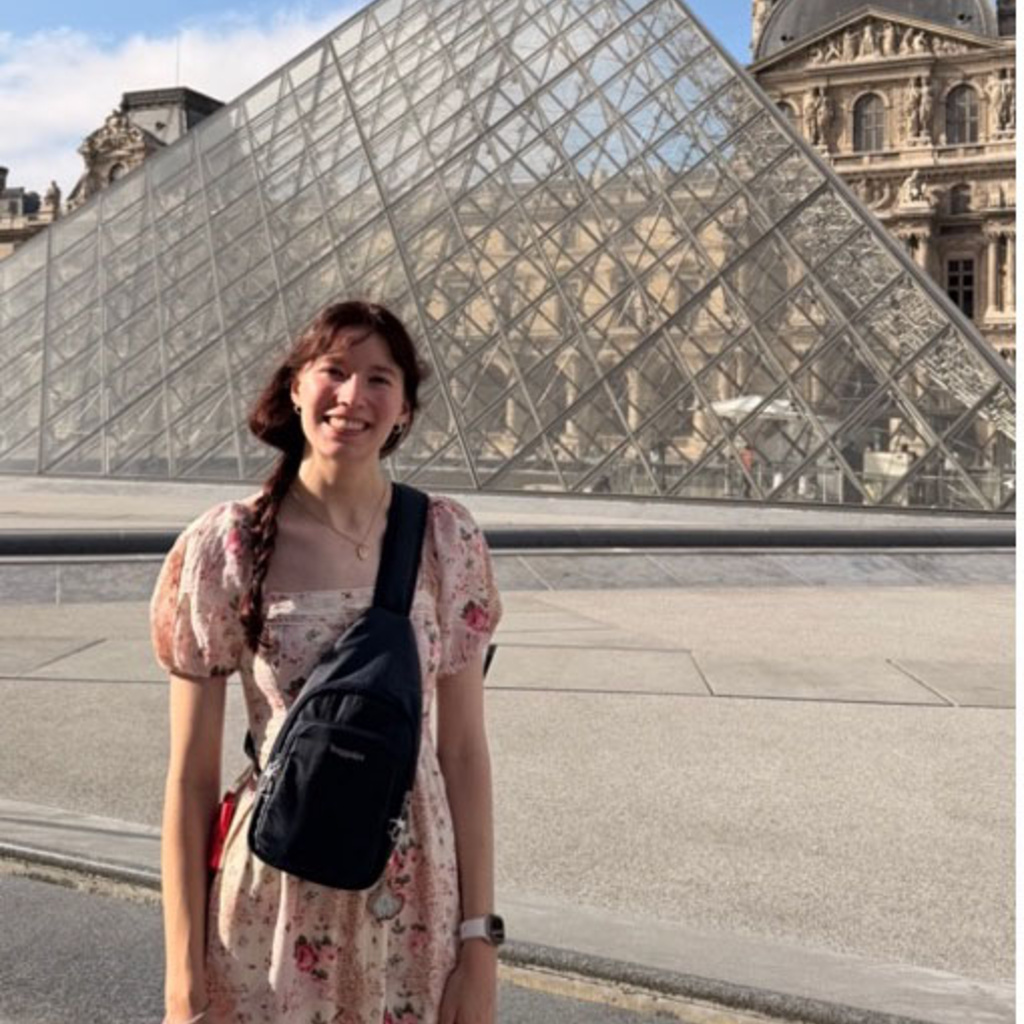
Olivia Scholin
This past summer I conducted a research trip throughout France studying the work and life of French painter Jean-Auguste-Dominique Ingres.
With a focus on his life-long fascination with the story of Paolo and Francesca from Dante’s Inferno, as well as supporting exploration into works such as Antiochus and Stratonice and Roger Freeing Angelica, my research will help to show how artists such as Ingres shape public interpretation of popular narratives. My time with his works will also prove how modern Ingres’ouevre is, despite his constant looking back to past epochs and artists.
Time spent in Paris, Angers, Bayonne, and Montauban, Ingres’ hometown and the location of the Musée Ingres, not only exposed me to his work, but also to the artistic environment he knew over two hundred years ago.
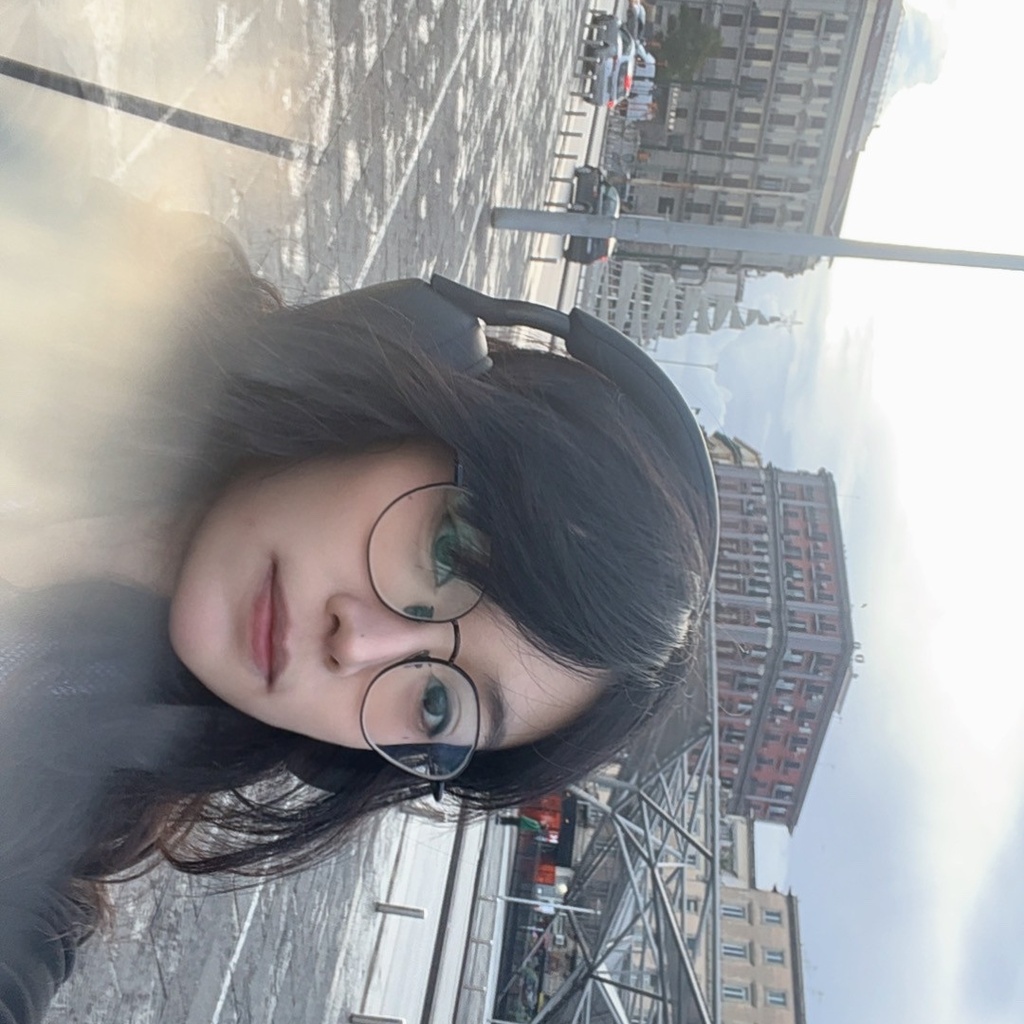
Yuwei Wei
This summer, thanks to the Summer Award sponsored by the Department of Art, Art History, and Design, I traveled to Italy and conducted research for my graduate qualifying paper.
My paper discusses the relationship between the design and orientation in decoration within commercial buildings during the Roman Empire and their marketing function. Therefore, during my 22 days in Italy, I spent more than half of my time in Pompeii documenting the food establishments within the city.
During the remaining time, I visited Paestum, Herculaneum, Campi Flegrei, Minturnae, Ostia, and Lucus Feroniae. These sites also preserve several commercial buildings from the ancient Roman or Greek, providing comparative perspective and reference materials for my studies.
This summer opportunity provided me with information and details that could not be obtained through written sources alone.